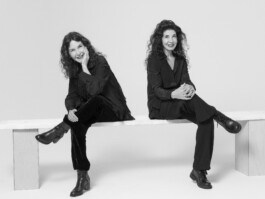

photo © Brigitte Lacombe
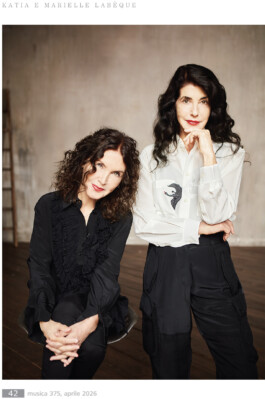
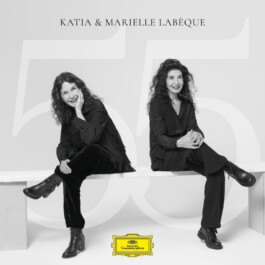
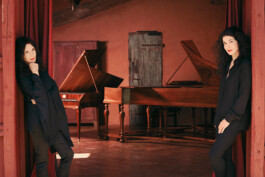
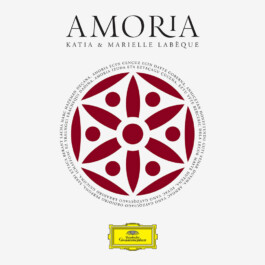
« 55 » is a project to celebrate 55 years of recording and stage.
Everything has already been said about composers: the great figures have stepped into the limelight, their names repeated so often that they have become almost self-evident. But alongside them, as if in a neighbouring room, other voices existed, immense and fragile: those of the women who wrote music. They composed against the grain, often against the tide, with the patience and strength of underground springs.
Their apparent silence was only a veil imposed by history.
Their stories, extraordinary journeys and courageous destinies, ultimately reveal, when we listen closely, a more accurate and broader history of music.
—Nicolas Mariot
Tout a déjà été dit concernant les compositeurs : les grandes figures se sont avancées dans la lumière, leurs noms, répétés, sont devenus presque des évidences. Mais à côté d’eux, comme dans une chambre voisine, d’autres voix existaient, immenses et fragiles : celles des femmes qui écrivaient la musique. Elles ont composé à contre-jour, souvent à contre-courant, avec la patience et la force des sources souterraines. Leur silence apparent n’était qu un voile apposé par l’histoire. Leurs histoires à elles, itinéraires extraordinaires, destins courageux, laissent finalement, lorsque l’on tend l’oreille, résonner une histoire de la musique plus juste et plus vaste.
—Nicolas Mariot

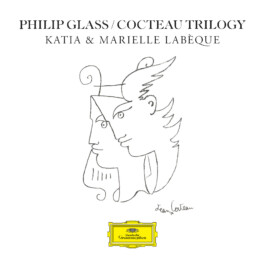
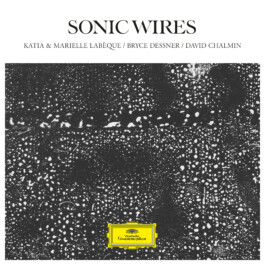
This week Tom has been listening to: Katia and Marielle Labeque’s 55: an anthology (out next Friday) of tracks that’s all about the sister-pianists’ endless curiosity, with music by Fanny Mendelssohn, Margaret Bonds and Marie Jaëll for the first time in their 55-year career, alongside pieces they’ve inspired and commissioned by David Chalmin, Bryce Dessner and Philip Glass – and there’s a breathtaking new version of the final movement of Ravel’s Mother Goose Suite too.
- TOM SERVICE - The Guardian
june 3rd 2026
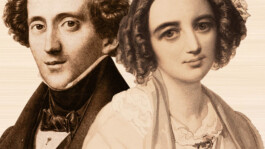
Fanny Mendelssohn (1805-1847)
Fanny was born in Hamburg into a cultured family. She was as talented as her brother Felix, but her father and brother condemned her to remain in the shadows, believing that a woman of her standing should devote herself to her home. Supported by her husband, the painter Wilhelm Hensel, she nevertheless composedmore than 460 pieces: lieder, piano and choral music some of which were published under Felix's name, including the Lieder ohne Worte. In Berlin, she organised the Sonntagsmusiken, private concerts where she conducted and performed her own works, and it was not until 1846 that she finally published under her own name. The following year, while rehearsing an oratorio by her brother, she died at the age of forty-one from a stroke, leaving behind a body of work that has continued to resist oblivion.
À Hambourg, dans une famille cultivée, naît Fanny, aussi douée que son frère Felix, mais que son père et son frère condamnent à rester dans l’ombre, jugeant qu'une femme de son rang doit s effacer derrière le foyer. Soutenue par son époux, le peintre Wilhelm Hensel, elle compose pourtant plus de 460 pièces — lieder, piano, musique chorale — dont certaines paraissent sous le nom de Felix, jusque dans les « Lieder ohne Worte ». À Berlin, elle organise les Sonntagsmusiken, concerts privés où elle dirige et interprèten ses œuvres, et ce n est qu'en 1846 qu'elle publie enfin sous son propre nom. L’année suivante, en répétant un oratorio de son frère, elle est enlevée à quarante et un ans par un accident vasculaire, laissant derrière elle une œuvre qui, elle, n'a cessé de résister à l’ effacement.

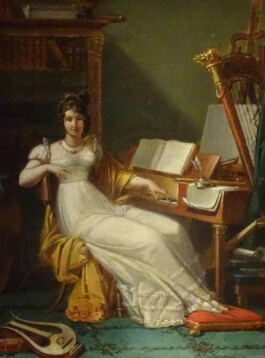
Hélène de Montgeroult (1764-1836)
Hélène was born in Lyon and moved to Paris at a very young age, where she became a brilliant pianist during the final years of the Ancien Régime. The Revolution brought her career to a halt, as she was accused of being an aristocrat, but she saved her life by improvising on ‘La Marseillaise » which earned her unexpected respect from the judges. In 1795, she entered the Paris Conservatoire, the first woman to teach piano, and in 1816 published a 972-page Cours complet with 114 études, which paved the way for Chopin and Schumann. She composed sonatas, concertos and romances, then retired and died in Florence in 1836.
Hélène naît à Lyon et très tôt s’installe au cœur des salons parisiens, pianiste brillante qui traverse les dernières années de l’Ancien Régime. La Révolution l’arrête, l’accuse d’être aristocrate, mais elle sauve sa vie par une improvisation sur « La Marseillaise » qui arrache aux juges un respect inattendu. En 1795, elle entre au Conservatoire de Paris, première femme à enseigner le piano, et publie en 1816 un Cours complet de 972 pages et 114 études, qui ouvrent déjà la voie à Chopin et à Schumann. Elle compose sonates, concertos, romances, puis se retire et meurt à Florence en 1836.

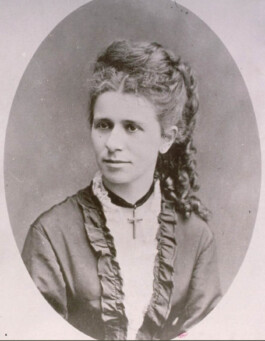
Marie Jaëll (1846-1925)
Marie was born in Steinseltz, Alsace, a child prodigy at the piano, pupil and friend of Liszt, who mentored her, entrusted her with his own works and recognised her as a virtuoso. She composed concertos, piano pieces and chamber music, and her passion also turned to another mystery: understanding the alliance between body and mind in musical gesture. She studied physiology and psychology, collaborated with Charles Henry, wrote La Musique et la Psychophysiologie (Music and Psychophysiology), and invented a method in which thought, flesh and emotion were no longer separate. She died in Paris in 1925, leaving behind a rare legacy, situated at the frontier between knowledge and sound.
C’est à Steinseltz, en Alsace, que naît Marie, enfant au piano fulgurant, élève et amie de Liszt qui la dirige, la confie à ses propres œuvres et la reconnaît comme virtuose. Elle compose concertos, pièces pour piano, musique de chambre et sa passion se tourne aussi vers un autre mystère : comprendre l’alliance du corps et de l’esprit dans le geste musical. Elle fréquente la physiologie, la psychologie, collabore avec Charles Henry, écrit La Musique et la Psychophysiologie, invente une méthode où pensée, chair et émotion ne sont plus séparées. À Paris, en 1925, elle s’éteint, laissant un héritage rare, situé à la frontière du savoir et du son.

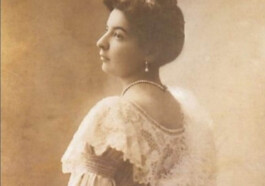
Dora Pejacevic (1885-1923)
Dora was born in Budapest into a noble Croatian family, and her childhood was steeped in music. She studied music in Croatia and Germany, composing lieder, chamber pieces and orchestral scores. Her Symphony in F sharp minor, premiered in 1920, is considered the first great Croatian symphony. Three years later, after giving birth, she died in Munich at the age of thirty-seven, leaving her manuscripts to lie dormant in Zagreb. Thanks to this, and even though she remained forgotten for a long time, her music is now being revived in concert halls across Europe.
À Budapest, dans une famille noble croate, naît Dora, dont l’enfance est baignée par la musique. Elle l’apprend en Croatie et en Allemagne, compose lieder, pièces de chambre, partitions orchestrales, et sa « Symphonie en fa dièse mineur », créée en 1920, résonne comme la première grande symphonie croate. Trois ans plus tard, après avoir donné la vie, elle meurt à Munich à trente-sept ans, laissant ses manuscrits dormir à Zagreb. Grâce à cela et même si elle est longtemps restée oubliée, sa musique renaît aujourd’hui dans les salles d’Europe.

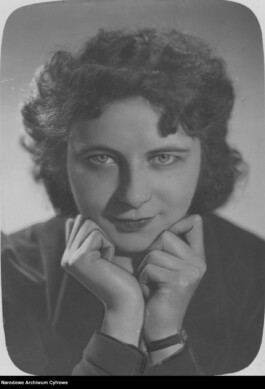
Grazyna Bacewicz (1909-1969)
Grazyna was born in Łódź and trained in violin and composition in Warsaw, then in Paris with Nadia Boulanger. In the 1930s, she became a soloist with the Polish Radio Orchestra, played solo in clandestine recitals during the occupation, and then taught composition at the Łódź Academy of Music. She wrote seven quartets, four symphonies and seven concertos, her work evolving from neoclassicism to more modern styles. In the 1950s and 1960s, she was one of the few women to achieve international recognition. She died in Warsaw in 1969.
À Łódź naît Grazyna, qui se forme au violon et à la composition à Varsovie, puis à Paris auprès de Nadia Boulanger. Dans les années 1930, elle devient soliste de l’Orchestre de la Radio polonaise, joue seule lors de récitals clandestins sous l’occupation, puis enseigne la composition à l’Académie de musique de Łódź. Elle écrit sept quatuors, quatre symphonies, sept concertos, une œuvre qui passe du néoclassicisme à des langages plus modernes, et dans les années 1950-60, elle compte parmi les rares femmes reconnues internationalement Elle meurt à Varsovie en 1969.

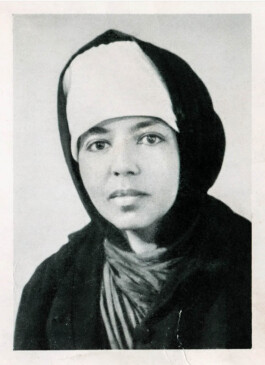
Emahoy Tsegué-Maryam Guébrou (1923-2023)
Born in Addis Ababa into an aristocratic family, Emahoy left Ethiopia at an early age to study violin and piano in Cairo and then Jerusalem, before retreating behind the walls of the Guishen Mariam convent. In solitude, she composed pieces for piano, violin and voice, music that was both strange and clear, nourished by Ethiopian and Western modes. A few records were released in the 1960s, then anonymity enveloped her, until the early 2000s, when the ‘Ethiopiques collection finally brought her unique voice to the fore. She lived to the age of 100 in the Jerusalem convent she never left, and when she passed away in 2023, she left behind a body of work imbued with fervour and silence, as if prayer had found its instrument.
Née à Addis-Abeba dans une famille aristocratique, Emahoy quitte tôt l’Éthiopie pour apprendre le violon et le piano au Caire puis à Jérusalem, avant de se retirer derrière les murs du couvent de Guishen Mariam. Dans la solitude, elle compose des pièces pour piano, pour violon, pour la voix, musique étrange et limpide à la fois, nourrie des modes éthiopiens et de l’Occident. Quelques disques paraissent dans les années 1960, puis l’anonymat l’enveloppe, jusqu’à ce qu'au début des années 2000, la collection « Éthiopiques » fasse entendre enfin sa voix singulière. Dans ce couvent de Jérusalem qu'elle n'a jamais quitté, elle vit jusqu ’à cent ans, et lorsqu'elle s’éteint en 2023, elle laisse en partage une œuvre traversée de ferveur et de silence, comme si la prière avait trouvé son instrument.

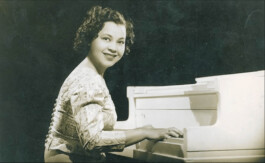
Margaret Bonds (1913-1972)
In Chicago, Margaret grew up in a family of musicians and learned to play the piano from her mother, but at Northwestern University she encountered the humiliation of racism, was refused housing, and was hurt by her teachers. In the university library, she met Langston Hughes, several of whose poems she would set to music. In 1933, she became one of the first African Americans to play with the Chicago Symphony Orchestra, and her compositions, inspired by spirituals and gospel music, also reflected the social issues of her time, such as the Montgomery Variations, dedicated to Martin Luther King and the civil rights movement. She died in Los Angeles in 1972, at the age of fifty-nine, leaving behind a discreet body of work that is now coming back into the spotlight.
À Chicago, Margaret grandit dans une famille de musiciens, apprend le piano auprès de sa mère, mais rencontre à la Northwestern University l’humiliation du racisme, refusée dans les logements, blessée par ses professeurs. Dans la bibliothèque de l’université, elle croise Langston Hughes, dont elle mettra plusieurs poèmes en musique. En 1933, elle devient l’une des premières Afro-Américaines à jouer avec l’Orchestre de Chicago, et ses compositions,nourries de spirituals et de gospel, portent aussi l’engagement de son temps, comme les« Montgomery Variations » dédiées à Martin Luther King et au Mouvement des droits civiques. Elle meurt à Los Angeles en 1972, à cinquante-neuf ans, léguant à la postérité une œuvre discrète qui revient aujourd’hui dans la lumière.

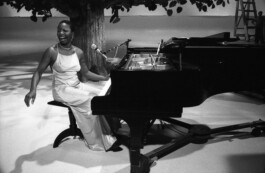
Nina Simone (1933-2003)
Eunice Kathleen Waymon was born in North Carolina, in a country that forced her to grow up in the shadow of segregation. She dreamed of Bach, Mozart, Beethoven, dreamed of becoming a classical concert pianist, but in 1951, the Curtis Institute rejected her — she would always remain convinced that it was her skin colour that had been rejected. So, to make a living, she played in clubs, gave herself another name, Nina Simone, and it was under this name that her voice became a storm. In the 1960s, she sang of rebellion and hope, ‘Mississippi Goddam ’ as a cry against murder and bombs, ‘To Be Young, Gifted and Black’ as a song of pride. Life then pushed her into exile, to Africa, Europe, glories tinged with loneliness, and it was in France, in Carry-le-Rouet, that she passed away in 2003, leaving behind a voice that continues to burn brightly.
Eunice Kathleen Waymon naît en Caroline du Nord, dans un pays qui l’oblige à grandir sous l’ombre de la ségrégation. Elle rêve de Bach, Mozart, Beethoven, rêve de devenir concertiste classique, mais en 1951, le Curtis Institute la rejette — elle gardera toujours la certitude que cest sa peau qu on a refusée. Alors, pour vivre, elle joue dans les clubs, se donne un autre nom, Nina Simone, et c est sous ce nom que sa voix devient tempête. Dans les années 1960, elle chante la révolte et l’espérance, « Mississippi Goddam » comme un cri contre les meurtres et les bombes, « To Be Young, Gifted and Black » comme un chant de fierté. La vie la pousse ensuite vers l’exil, l’Afrique, l’Europe, les gloires traversées de solitude, et c est en France, à Carry-le-Rouet, qu'elle s’éteint en 2003, laissant derrière elle une voix qui continue de brûler.
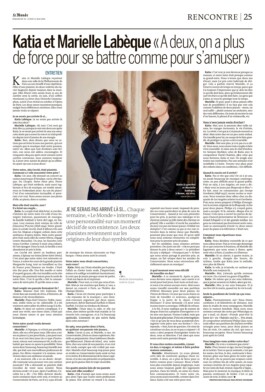
Le Monde 10.05.2026 - "Katia et Marielle Labèque: A deux on a plus de force pour se battre comme pour s'amuser"

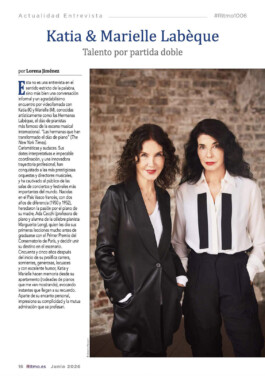
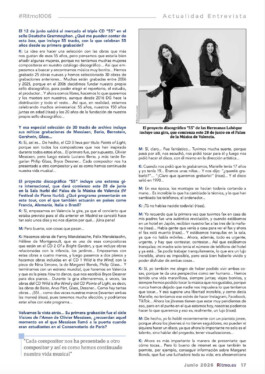
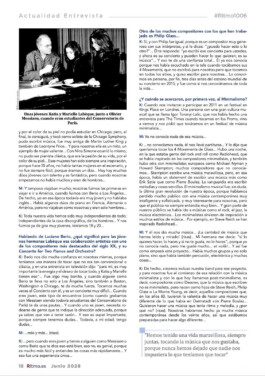
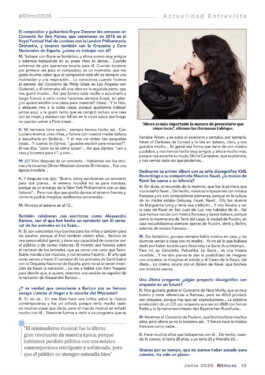
El Ritmo.es Junio 2026 - "Katia & Marielle Labèque, Talento por partida doble"


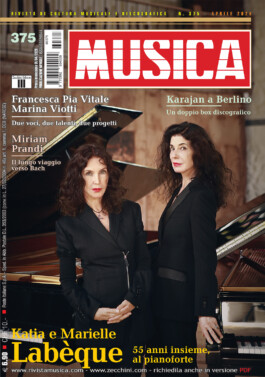
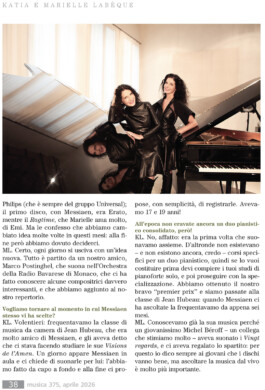
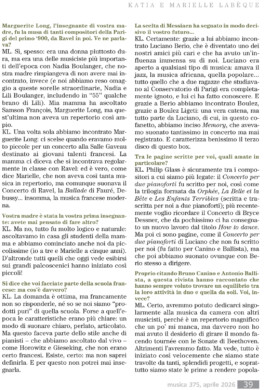
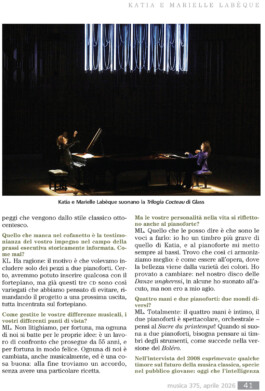
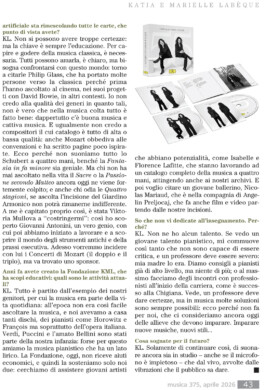
Musica - Aprile 2026 - "Katia et Marielle Labèque: 55 anni insieme, al pianoforte"


PRESS BOOK
PRESS BOOK RECORDINGS
NEWSLETTER
Sign up for our newsletter so you don't miss any news
Site by Daniel
PRESS BOOK
PRESS BOOK RECORDINGS
NEWSLETTER
Sign up for our newsletter so you don't miss any news
Site by Daniel